Learn›Paragraph ComprehensionPC›Inference
Inference questions
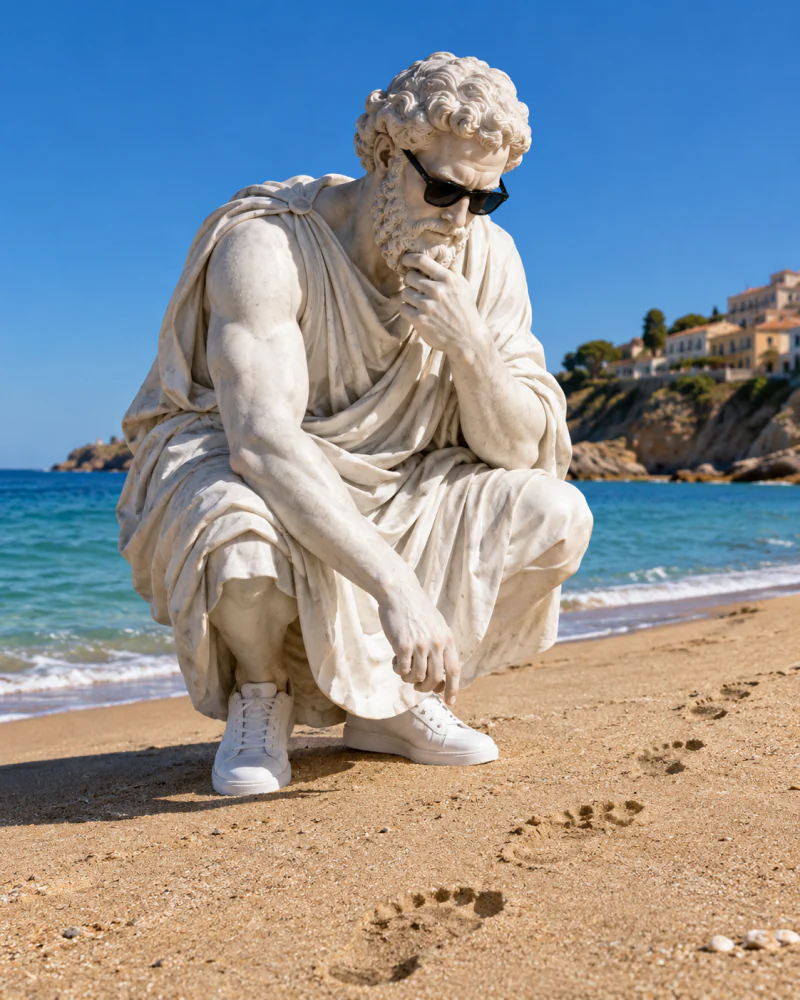
An inference is not a guess. It is the conclusion the passage leaves for you to draw: not written, but impossible to miss once you look. The right answer is always the smallest safe step from what the text says.
Not written, but it must be true
Mara checked the weather twice before leaving. She packed an umbrella and a spare pair of socks and left forty minutes early for an interview that was a ten-minute walk away.
The passage never says how Mara feels. But someone who leaves forty minutes early for a ten-minute walk, and prepares for every kind of weather, is clearly determined not to be late. That is the inference: it follows from the facts.
The must-be-true test
Ask of each choice: does the passage make this true, or only possible? “Mara wanted to arrive on time” must be true. “Mara got the job” might be true, but nothing in the text proves it.
How to solve them
-
1
One small step from the text
The right inference stays close to the passage. Choices that need a long chain of “and then probably…” go too far.
Next step: Extreme wordsOne stepMara wanted to be on time.
Follows from the facts
Too farMara will become a manager one day.
Nothing supports it
-
2
Beware of extreme words
Words like always, never, all, none, only and completely make a choice hard to prove. Softer words (some, often, may, likely) are much more often right on inference questions.
Next step: No outside knowledgeRiskyMara is always nervous.
One morning proves nothing about always
SaferMara was probably anxious about the interview.
Supported
-
3
Use only what the passage gives you
A choice can be true in real life and still be wrong, because the passage does not support it. Your general knowledge is not evidence here.
Next step: Feelings & attitudesExample“The museum added evening hours on Fridays, and Friday visits doubled.” What can be inferred?
- Supported: evening hours made it easier for some people to visit.
- Not supported: “people prefer art at night” (too broad) or “ticket prices dropped” (never mentioned).
Answer The new hours attracted more visitors
-
4
Inferring feelings and attitudes
Many inference questions ask how someone feels or what the author thinks. Look at the actions and word choices: they are the evidence.
Next step: EliminateEvidenceHe slammed the door and did not answer.
He was upset
EvidenceThe author calls the plan “bold and long overdue.”
The author approves
-
5
Eliminate, then choose
Cross out choices that contradict the passage, choices about things it never mentions, and choices with extreme words. The one left is usually the modest, well-supported one.
Next step: Inference vs detailShortcutPoint at the clues
For the answer you choose, you should be able to point at two or three phrases that lead to it, even though no phrase says it directly.
-
6
Inference versus detail
If a choice repeats something the passage states directly, it is usually not the answer to an inference question: the question asked for what the text implies, not what it says.
Detail (stated)Mara packed an umbrella.
Written in the text
Inference (implied)Mara thought it might rain.
Follows from it
4 traps in the answer choices
The test writes its wrong answers on purpose: each one is what you get if you make one of these mistakes.
Possible is not proven
What can be inferred about Mara?
Wrongshe got the job
Rightshe did not want to be late
Extreme words
What can be inferred about Mara?
Wrongshe is never relaxed
Rightshe was anxious that morning
Outside knowledge
Friday evening visits doubled. So…
Wrongpeople prefer art at night
Rightthe new hours drew more visitors
Restating a detail
It can be inferred that Mara…
Wrongpacked an umbrella (stated)
Rightexpected bad weather might come
5 questions at test level
Pick an answer, then read why. No timer, no account.
Passage: “By noon the bakery’s shelves were empty, and a handwritten sign on the door read ‘Back tomorrow at 6 a.m.’” What can be inferred?
Show the answer
B. Empty shelves by noon and a sign saying it will be back the next morning point to a sell-out, not a closure (“back tomorrow”). Nothing says the baker was sick. The answer is The bakery sold out of bread that morning.
Passage: “Leo set three alarms, laid out his uniform the night before, and checked the bus schedule twice.” What can most likely be inferred about Leo?
Show the answer
C. Three alarms, clothes ready and the schedule checked twice all point to one thing: he did not want to be late. “Always late” and “hates his job” go beyond the text. The answer is He wanted to be ready for the morning on time.
Passage: “After the new bike lanes opened, the number of cyclists on Main Street rose by half, while car accidents on the street fell.” Which inference is best supported?
Show the answer
B. More cyclists after the lanes opened suggests the lanes made cycling there more attractive. “Everyone,” “banned” and “every city” go far beyond one street. The answer is The bike lanes made cycling on Main Street more appealing.
Passage: “The reviewer called the restaurant’s new menu ‘a bold step that pays off on almost every plate.’” The reviewer’s attitude toward the menu is…
Show the answer
A. “A bold step that pays off” is praise, and “almost every plate” keeps it from being total. The attitude is Mostly approving.
Passage: “Ticket sales for the outdoor concert were strong until the forecast changed on Thursday; by Friday, organizers had moved the show to the school gym.” What can be inferred?
Show the answer
B. A forecast change followed by moving an outdoor show indoors points to expected bad weather. The show was moved, not canceled, and nothing is said about size or refunds. The answer is Bad weather was expected for the concert.
8 flashcards
Tap a card to flip it. Keep the ones you miss until they stick.
All 8 cards known.
You finished inference questions.
Practice score: not taken yet Take the practice
Next topic: ConnectorsSee this topic move.
In the course, every topic is drawn step by step on a whiteboard while a voice explains it, with timed practice tests and a plan for your test date. The first lessons of every module are free.
