What Is the CAT-ASVAB?
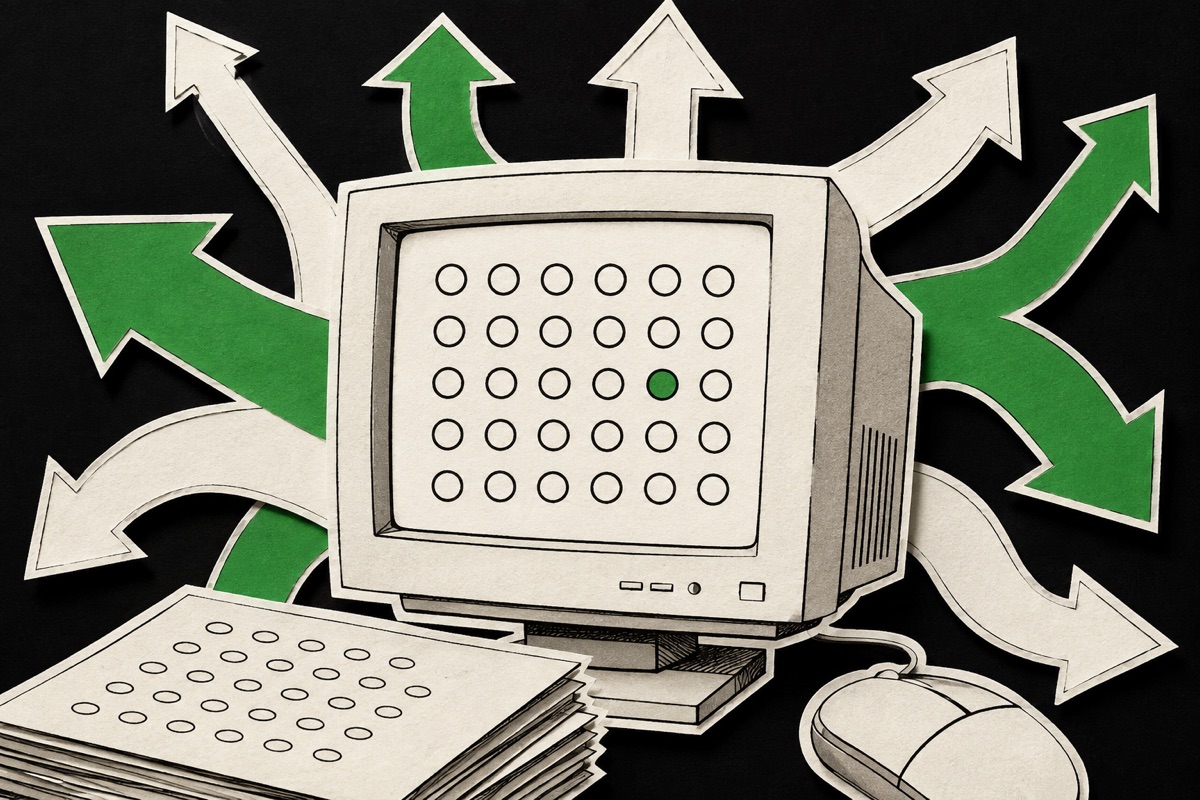
Most ASVABs taken today at a MEPS or a military testing site aren't the same fixed paper test everyone used to take — they're the CAT-ASVAB (Computer Adaptive Test), a version that adjusts the difficulty of each question based on how you answered the last one.
Answer correctly, and the next question gets harder. Answer incorrectly, and the next one gets easier. The test isn't measuring how many questions you got right overall — it's hunting, question by question, for the exact level where you start to miss. That equilibrium point is your score.
Why the First Questions Carry More Weight
This is what most people don't understand about the CAT, and it's the part that changes strategy the most: the algorithm has less information at the start of each section, so the early difficulty adjustments are the biggest ones. One of the first five questions in a section sets a wide difficulty range; the later questions only make fine adjustments within a range that's already mostly locked in.
That has a direct consequence: rushing or guessing on the first few questions of a section costs more than rushing at the end. If you carelessly miss an easy question early on, the system drops you into a difficulty level lower than where you actually belong, and it's expensive to climb back from there.
The CAT Doesn't Let You Go Back
Unlike a paper test, the CAT-ASVAB doesn't let you return to a previous question once you've answered it. Every answer is final. That completely changes how you should handle uncertainty: on a paper test, the strategy is "skip what you don't know and come back later." On the CAT, that strategy doesn't exist — you have to decide and move forward.
What This Means for Your Study Strategy
- Practice under real time pressure from day one. If you study without a timer, you're training a different skill than the one the test actually measures.
- Treat the first questions of each section with more care, not more speed. The natural instinct is to "warm up" quickly at the start — that's exactly backwards on the CAT.
- There's no going back, so there's no "save it for later." Practice making a decision and moving on, even when you're not 100% sure — that's the actual skill the adaptive test demands.
- A "weird" score (better on hard questions than easy ones) almost always comes from a careless mistake early on, not a knowledge gap. If that happens in practice, check your pacing on the first few questions before assuming you don't know the material.
Why This Is an Advantage, Not Just a Difficulty
Understanding the CAT turns the ASVAB from "a knowledge test" into "a system with rules you can play to your advantage." Someone who knows exactly how each stretch of the test is weighted studies differently — and performs differently — than someone who sits down and guesses.
That's the foundation of ASVABIFY's whole method: it's not just teaching math or vocabulary, it's teaching how the algorithm evaluates you, so you stop spending study time where it pays off the least.